What My Nationally Certified Online Profile Expert (NCOPE) Recertification Reinforced About Effective Career Marketing
Quick answer:
Your LinkedIn profile is never read the same way twice. Recruiters, hiring managers, subject matter experts, background investigators, AI systems, potential clients, and referral partners all look at the same page and ask different questions. LinkedIn profile positioning is what makes your value clear to every one of them. It gives technology the language to find you and gives people the evidence to trust you.
Right now, someone is looking at your LinkedIn and deciding whether you are worth a phone call.
Your banner, headshot, and headline are being evaluated in less than 10 seconds.
Sound familiar?
That decision often comes down to positioning.
Your LinkedIn profile is far more than an online resume. It is often one of the first places a recruiter, hiring manager, or executive goes to initially understand who you are.
A potential client, referral partner, or colleague looks there too, deciding whether you are worth contacting.
Long before a conversation takes place, your profile is already communicating your credibility and readiness for the opportunities you want next. It may support a recruiter’s sourcing decision, help a hiring manager validate your resume, or give a prospective client confidence before booking a consultation.
Why This Recertification Still Matters
Recently, I completed my Nationally Certified Online Profile Expert (NCOPE) recertification through the National Résumé Writers’ Association (NRWA). I appreciate Tom Powner and the NRWA for continuing to examine how LinkedIn, recruiting, search, and artificial intelligence are changing the way professionals are discovered.
After all, if I expect my clients to invest in continuous learning, I should do the same. More than 30 years in this field has taught me that our industry never stands still.
LinkedIn evolves. Hiring evolves. Technology evolves.
WE evolve.
For me, the recertification process taught new advancements with LinkedIn and reinforced principles I have taught for more than three decades.
It also gave me a chance to test those principles against current developments in LinkedIn, AI, and recruiting.
In short, the most important reinforcement was simple: technology is finally becoming better at recognizing what strong LinkedIn profile positioning has always required.
Why Has My Philosophy Stayed the Same for All These Years?
If you’ve followed me for any length of time, you know that I have taught that effective career marketing is never about writing for a single audience.
And, I have never believed that great career marketing was about writing for algorithms. Rather, it is about communicating your expertise so clearly that every audience involved in a decision can understand your value.
Now, we must add artificial intelligence as another audience in the conversation.
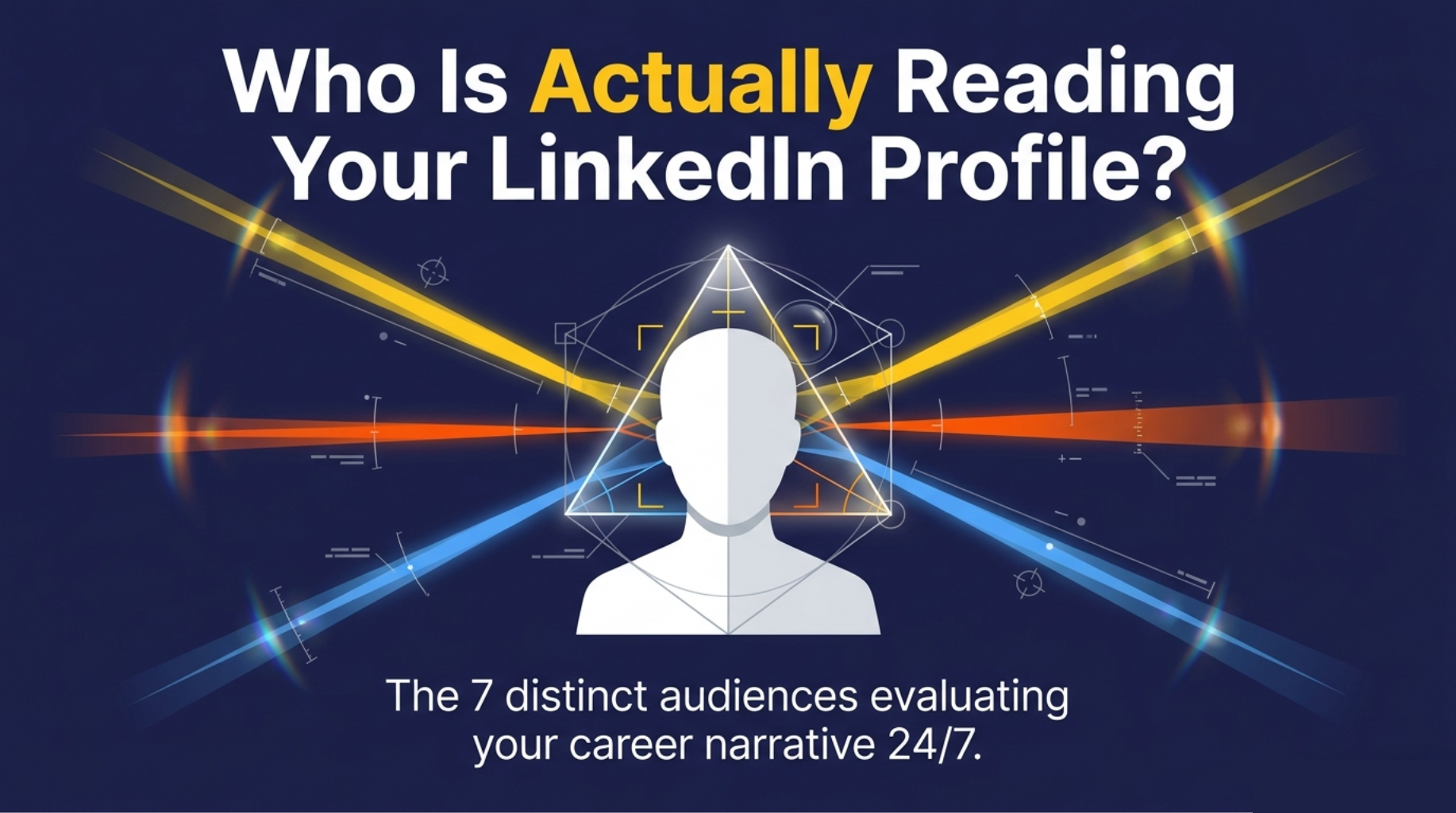
Consider that the same LinkedIn profile may be reviewed by a recruiter, an HR professional, or a subject matter expert. It may also reach a hiring manager, a background investigator, an AI system, or a potential client. Each one brings a different purpose and a different set of questions — and they are viewing it from their perspectives.
That distinction matters because a profile optimized only for search may still fail when a human reads it.
For example, a profile that sounds impressive to an executive may still be difficult for a recruiter to categorize.
Meanwhile, a profile that attracts a potential client may still raise doubts if it looks outdated, inactive, or inconsistent even within the profile. Strong LinkedIn profile positioning has to work across every one of these audiences, not just one.
Who Is Actually Reading Your LinkedIn Profile?
A recruiter is often trying to determine whether your background aligns with an active need. So they may search by role, skill, expertise, industry, or certification. Once they find you, they need enough clarity to decide whether to keep reading.
Human Resources, meanwhile, is evaluating qualifications, career progression, and consistency with the position. Because they are often translating between organizational requirements and your professional history, they need language that is accurate and easy to understand.
A subject matter expert, on the other hand, evaluates depth. This reader is less likely to be persuaded by broad claims and more likely to look for evidence that you understand the actual work.
For this reason, specific problems solved, methodologies used, and results achieved help the subject matter expert distinguish genuine expertise from surface-level familiarity. A hiring manager or executive, by contrast, is evaluating judgment, leadership, and fit.
These readers want to understand how you think and what changed because of your work. In other words, they are not simply confirming that you completed tasks, but assessing whether your experience translates into future contribution.
For federal professionals, a background investigator may also review your public information. Since that audience is focused on accuracy, your dates, titles, and responsibilities should align with what is presented elsewhere.
The AI or machine audience, meanwhile, primarily uses signals and patterns to interpret and categorize information. Keywords matter here because they give technology language it can associate with your roles and expertise, though keywords alone are signals, not substance.
Finally, for business owners, potential clients and referral partners become additional audiences. A prospective client may be asking whether you understand the problem and if you can solve it. Meanwhile, a referral partner is deciding whether your profile gives them the confidence to put your name in front of someone else.
Every audience is reviewing the same profile, yet each is looking for different evidence. The machine audience looks for recognizable language, while human audiences evaluate credibility, judgment, trust, expertise, consistency, knowledge, and looking for what you can do for them.
You have to make it about them, not you. If your profile has every sentence starting with “I”, that’s a signal that it’s not about them.
Are Keywords Enough to Get You Noticed?
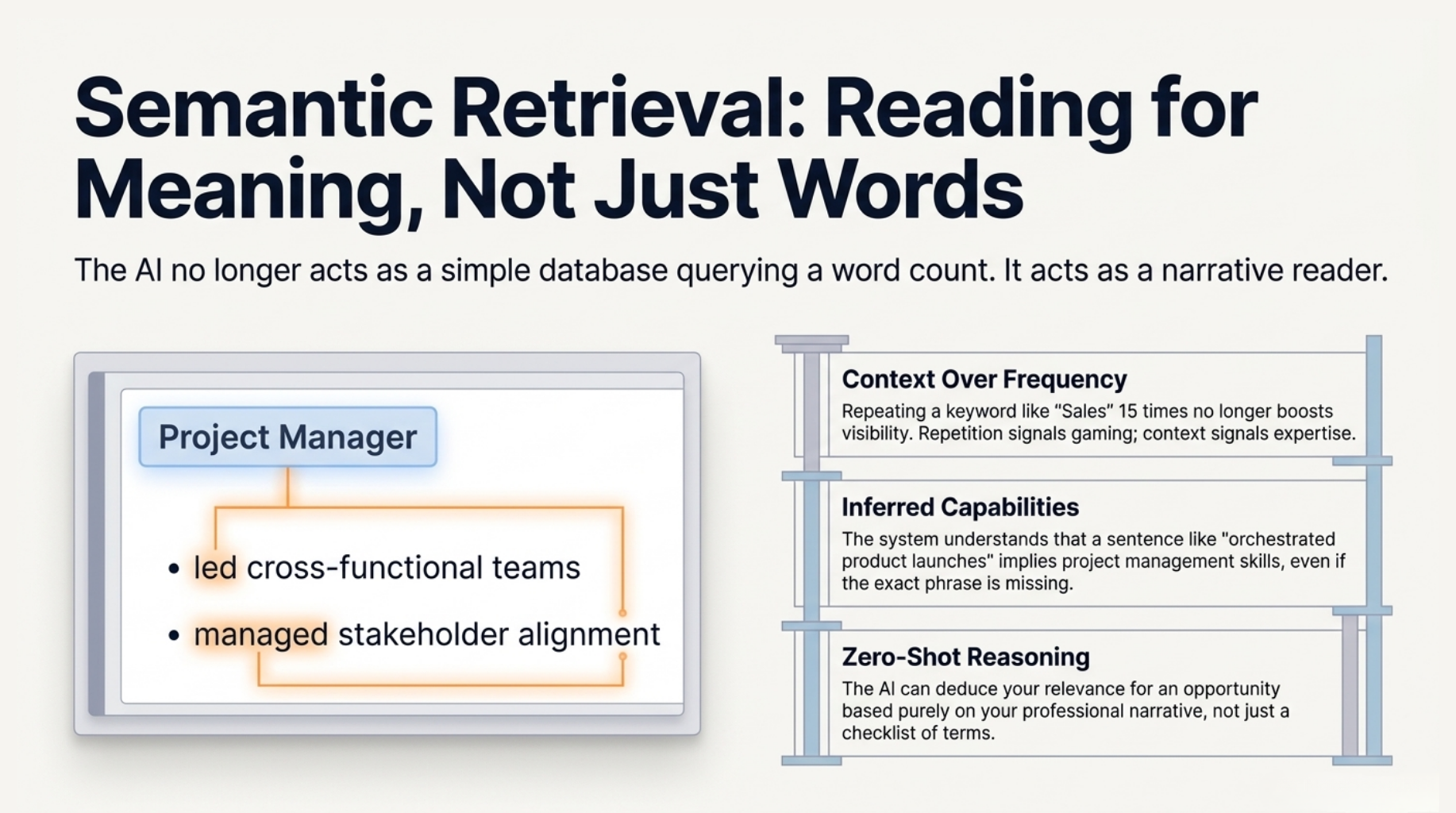
Keywords remain an important part of LinkedIn profile optimization. Without the right language, your profile becomes harder for recruiters and AI systems to interpret, so the correct terminology still helps establish relevance.
However, keywords alone have never been enough. A list of competencies may help a machine categorize your profile, but it does not show how you applied those competencies.
Likewise, naming a methodology establishes familiarity, but it does not demonstrate judgment or results. This is exactly where so many profiles become generic.
They include the right terms yet offer no real differentiation, describing responsibilities shared by thousands of professionals without showing the outcomes produced. Strong LinkedIn profile positioning gives keywords context instead.
For instance, rather than stating that you lead change, it shows what changed and what the organization gained. Rather than listing strategic planning, it demonstrates the scale, stakeholders, and results involved.
In short, keywords help the machine audience recognize you. LinkedIn profile positioning is what helps the human audience believe you.
Does AI Make Clarity More Important, Not Less?
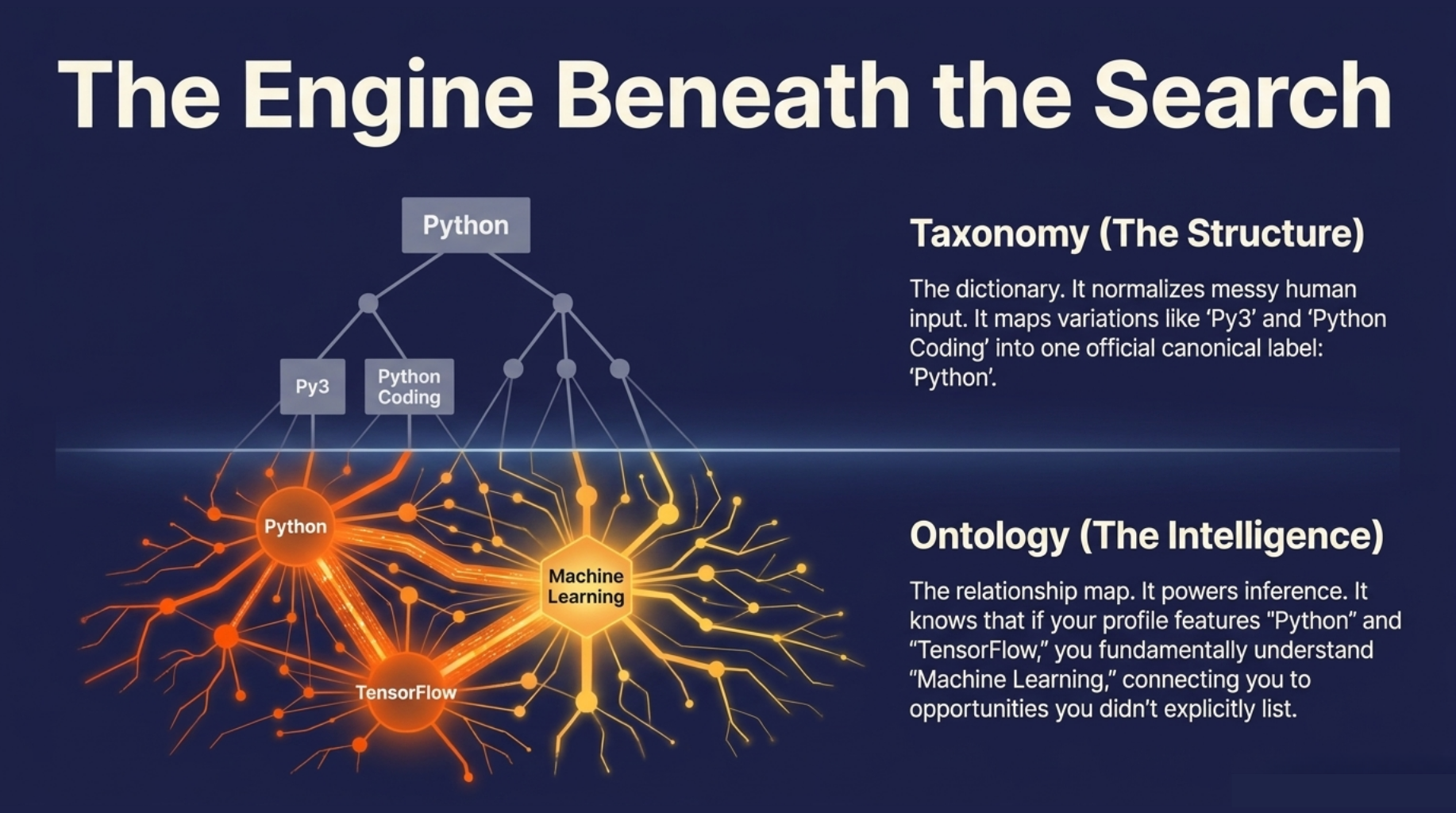
Technology is becoming better at recognizing relationships among your skills, accomplishments, and professional activity. As a result, this does not reduce the need for thoughtful career marketing. It increases it.
When systems evaluate more than isolated terms, inconsistency becomes more visible. A headline that presents one identity, paired with Experience entries that read like unrelated job descriptions, creates confusion. This happens even when the profile contains all the right words.
For this reason, the most effective response to AI is not to sound more mechanical. Instead, it is to become more precise, so both technology and people can see the connection between your experience and your goals.
Technology is finally catching up to good career marketing. Clarity, credibility, and evidence still determine whether a professional story is persuasive. AI simply adds another reader who benefits when those fundamentals are present.
Does Your Profile Tell One Consistent Story?
Your headline, About section, Experience, Skills, Featured section, recommendations, and activity should reinforce one professional identity. This does not mean reducing a complex career to a narrow label.
Instead, it means helping the reader understand the connecting thread across your experience. Many accomplished professionals have multidimensional careers, having worked across functions, industries, or leadership levels.
The goal is not to erase that complexity, but to organize it so the reader can see how the pieces fit together. A coherent profile answers three questions: what are you known for, who benefits from that expertise, and what changes because of your work.
How Does Each LinkedIn Section Support Your Positioning?
Your headline should communicate more than your current job title. Instead, it should help the right audience quickly recognize your professional direction and value.
For a job seeker, that may mean the level and type of role being pursued. For a business owner, it may identify the audience served or the problem solved.
Your About section, meanwhile, should connect the dots between your expertise and what decision-makers need. It is the place to explain the story behind the resume-style facts, including your themes and transitions.
Your Experience section should provide evidence rather than duties alone. Each relevant role should show scope, decisions, and results. The reader needs to see not only what you were responsible for, but the impact that followed.
Your Skills section should support that same story instead of reading like a random inventory. When Skills and the rest of the profile tell different stories, credibility and discoverability both suffer.
Your Featured section, on the other hand, gives readers proof they can examine, such as articles, presentations, or case studies. This matters especially for business owners and consultants, because it allows the profile to move from claims to visible evidence.
Recommendations, in turn, provide third-party validation. The strongest ones confirm the type of work you performed and the results you created for others, reinforcing leadership, trust, and technical depth.
Finally, your activity shows what you pay attention to and how you contribute to professional conversations. It does not require constant posting, but what you share should support the identity you are building everywhere else.
If you want a deeper walkthrough of why this investment pays off, I wrote about it in Why I Invest in LinkedIn Training.
When these sections operate independently, your profile feels fragmented. When they reinforce one another, however, it becomes a strategic LinkedIn profile positioning asset.
Why Do Hiring Decision-Makers Review LinkedIn?
Recruiters use LinkedIn to find and evaluate candidates, but they are not the only decision-makers who review profiles. Hiring managers and executives often use it to gather context before an interview or compare your public positioning with your application materials.
This is one reason a complete profile is not necessarily an effective one. Completion tells you that fields have been filled, while positioning tells the reader what those details mean.
A well-positioned profile makes the hiring process easier because it reduces uncertainty. It helps the recruiter explain your relevance, helps HR understand your progression, and helps the executive see your leadership value.
Why Should Business Owners Care About LinkedIn Too?
LinkedIn is no longer only a platform for job seekers, and it has not been for a long time. Consultants, coaches, attorneys, financial advisors, and other service-based business owners are evaluated there every day.
Before someone books a consultation or makes a referral, there is a strong possibility they will review your LinkedIn profile positioning first. It may be one of several trust checks used to determine whether you appear credible and current.
Potential clients often ask many of the same questions employers ask: Can I trust this person? Have they solved this type of problem before? How can they help me?
For business owners, LinkedIn can support client attraction, credibility, and referrals. It can also strengthen what happens outside LinkedIn, since someone referred to your business may visit your profile before taking the next step.
That means LinkedIn for business owners should not read like an outdated resume unless employment is also a goal. Instead, it should clearly explain who you serve, the problems you address, the evidence behind your credibility, and what is possible for your clients.
Whether you are attracting employers or clients, your positioning determines whether the right opportunities can recognize their fit with you.
Where Does LinkedIn Fit Into Magnetic Positioning™?
Everything I teach about LinkedIn connects to Magnetic Positioning™: the strategic process of identifying and closing your Positioning Gap™ so your value is clear and the right opportunities can find you.
Your Positioning Gap™ is the distance between the value you actually bring and what your current message allows others to understand. A professional may have exceptional experience yet present it through a generic headline or disconnected content, so the expertise is present but not visible.
LinkedIn helps close that gap when the profile translates experience into a clear identity, aligning market language with evidence from your career. The objective is never to impress everyone or chase every platform trend.
Instead, it is to communicate your expertise so clearly that the right people, and the relevant technology, understand the value you bring. That is the difference between having a LinkedIn profile and using LinkedIn profile positioning as a strategic asset.
If visibility without clarity sounds familiar, The Visibility vs. Value Principle goes deeper into why the two are not the same thing.
What’s a Practical Standard for Evaluating Your Profile?
When reviewing your LinkedIn profile, do not begin by asking whether it is complete. Instead, begin by asking whether it is clear.
Can a recruiter quickly identify the roles you are relevant for? Can a hiring manager understand your judgment and impact?
Would a background investigator find accurate, consistent information? Can a potential client understand who you help and why they should trust you?
Then examine whether the major sections reinforce the same professional story. Your headline should introduce it, your About section should explain it, and your Experience and Recommendations should prove it.
Finally, look for genericity. Remove statements that could describe almost anyone in your field, and replace unsupported claims with evidence instead.
That is effective LinkedIn profile positioning. It is not simply polishing language, but strategic alignment across message, evidence, and opportunity.
Is Your LinkedIn Profile Positioning You for What’s Next?
Technology will continue to evolve, but one principle has remained true throughout my career: people hire people they understand and trust.
Keywords help the machine audience. Clear positioning, however, is what persuades the human audience. The strongest profiles do both. They use relevant language so technology can interpret the story, then provide the credibility and trust that people need to make a decision.
Whether you’re pursuing your next leadership role, growing a business, or earning referrals, your LinkedIn profile remains one of your most valuable positioning assets.
The question is no longer whether your profile is complete. Instead, the better question is whether your LinkedIn profile positioning is attracting what you want next.
Frequently Asked Questions
Why does my LinkedIn profile matter if I am not actively job searching?
Your profile is reviewed continuously, not only when you apply. Recruiters, potential clients, and referral partners form an opinion of your credibility from it long before you speak with them.
Do recruiters really use LinkedIn to find candidates?
Yes. LinkedIn is widely regarded as one of the most effective tools for sourcing and vetting candidates. Most active recruiters check it as a standard part of their process.
Does AI read LinkedIn profiles?
Yes. LinkedIn’s systems and outside AI tools increasingly interpret relationships among your skills, experience, and activity. This makes a clear, consistent profile more important than ever.
Are keywords enough to optimize my LinkedIn profile?
No. Keywords help technology find and categorize you, but they do not persuade a human reader. You need both the right language and evidence-based positioning.
How should business owners use LinkedIn differently than job seekers?
Business owners should write to potential clients and referral partners, not only employers. That means clarifying who you serve and the problem you solve, rather than presenting a job-history style profile.
Which LinkedIn sections matter most for positioning?
Your headline, About section, Experience, Skills, Featured section, recommendations, and activity all matter for LinkedIn profile positioning. Together, they should reinforce one consistent professional story.
What is Magnetic Positioning™?
Magnetic Positioning™ is the strategic process of identifying and closing your Positioning Gap™. It closes the distance between the value you actually bring and what your current message allows people to understand.
Sources
- National Résumé Writers’ Association, NCOPE Certification: https://thenrwa.org/NCOPE

She also partners with entrepreneurs and business owners, applying the same Magnetic Positioning™ principles to help them attract the right clients and referrals.
Her services include career marketing: federal and private-sector resumes, LinkedIn profiles, interview and salary negotiation strategy, one-sheets, company pages, outplacement support, and AI implementation.
She publishes Magnetize Your Career, a blog and LinkedIn newsletter for mid-career professionals and executives across federal government, private sector, and military.
Learn more at cccareersolutions.com.
You've got this, and I've got you.
#KeepGoing
- Federal Merit Hiring Essays:Judge Blocks Question 3 - September 17, 2026
- AI in Federal Hiring: What OPM’s New Memo Means for Your Next Application - September 4, 2026
- Hope After a Layoff: Rebuild Your Career With Confidence - August 10, 2026